Upload an image, screenshot, scan, or document page and let Deep OCR extract the visible text. After recognition, you can review the result, clean messy formatting, and copy or export the text for notes, documents, AI tools, or everyday workflows.
supported formats: JPG, PNG, GIF, WebP images, max size: 10MB
Screenshot to Text Converter | Copy Text from Screenshots
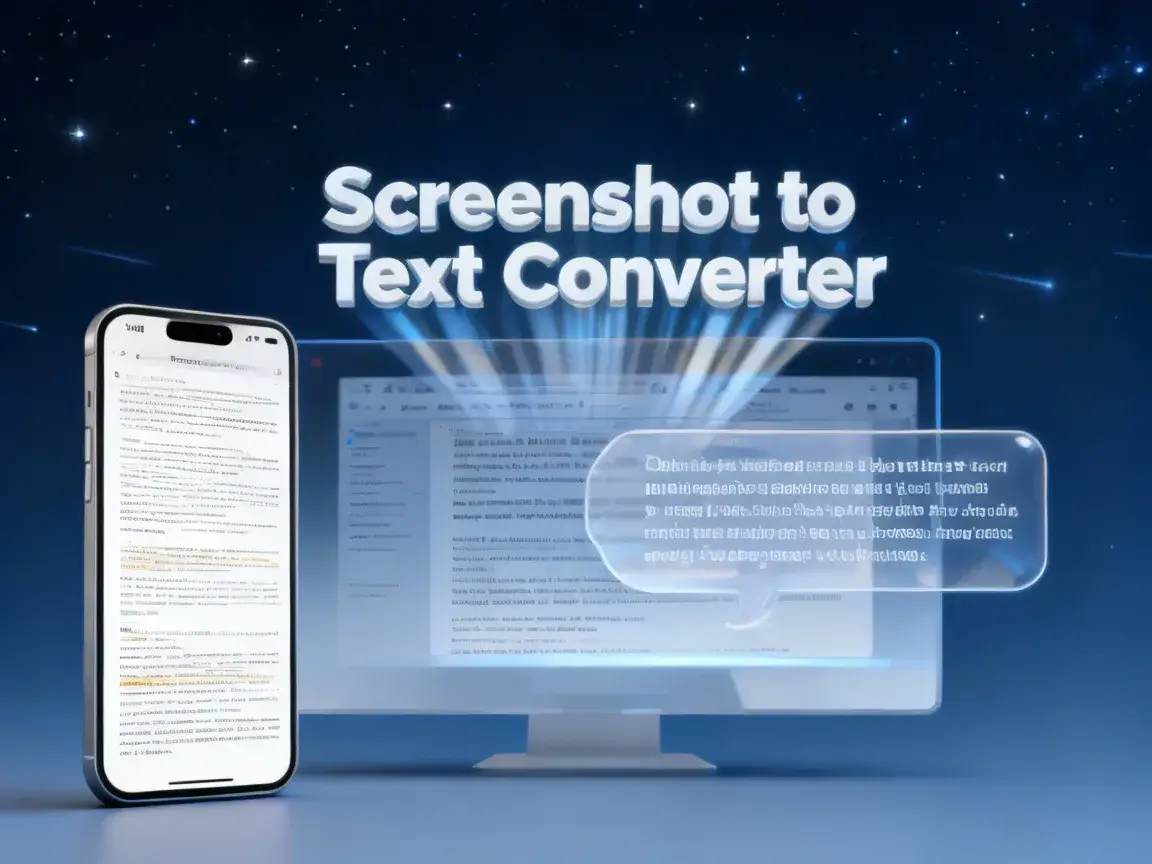
Screenshot to Text is built for text trapped inside screen captures. Use it when the source is not a photo of a physical object, but a screenshot from an app, website, chat window, system alert, dashboard, software interface, or social media post.
This Screenshot to Text workflow belongs to the broader Deep OCR toolkit, where extracted text is designed to be reviewed, cleaned, and reused.
What Screenshot to Text Is Best For
Screenshot to Text is different from a general image text extractor. A photo may contain labels, posters, receipts, signs, or scanned paper. A screenshot usually comes from a digital screen, where the text is part of an interface, conversation, app state, or web page.
That difference matters. Screen captures often include short UI strings, compact menus, chat formatting, status messages, error codes, and text mixed with buttons or icons. A useful Screenshot to Text workflow should make those details easier to copy and review, not just output a flat block of raw OCR text.
App Screenshots
App screenshots often contain button labels, menu items, onboarding text, form fields, notification copy, and settings pages. Screenshot to Text helps extract these interface strings so they can be reviewed, documented, translated, or reused in product notes.
This is useful for product managers, QA teams, designers, developers, support teams, and anyone who needs to capture UI text without manually retyping every label.
Error Messages and System Alerts
Error message screenshots are common in bug reports, customer support, QA testing, and developer workflows. They may include stack traces, error codes, file paths, warning text, or system messages that need to be copied accurately.
Screenshot to Text helps move that visible error text into a report, ticket, document, or AI prompt. Always review error codes, paths, numbers, and technical terms before using the extracted output.
Chat and Messaging Screenshots
Chat screenshots often include names, timestamps, short messages, reactions, and conversation fragments. Screenshot to Text helps extract message content so it can be summarized, documented, translated, or saved.
Because chats may contain personal or sensitive information, review what is visible in the screenshot before uploading it to any online OCR tool.
UI Screens and Website Snippets
UI screenshots and website snippets often combine headings, buttons, menu labels, cards, forms, pricing text, feature copy, or navigation items. Screenshot to Text can help extract this text for UX review, competitive research, content QA, design handoff, or documentation.
For UI-heavy screenshots, review reading order and grouped labels. Screen layouts can place text in columns, cards, sidebars, or overlays, so the extracted result may need cleanup before reuse.
Social Media Posts
Social media screenshots may include post text, usernames, comments, captions, hashtags, timestamps, and engagement labels. Screenshot to Text helps turn that visible content into copyable text for research, content planning, archiving, or analysis.
Before reusing the result, check usernames, handles, hashtags, dates, and quoted text against the original screenshot.
Why Use This Screenshot to Text Converter
A screenshot is quick to capture but hard to reuse. Once text is inside a screenshot, it becomes difficult to search, edit, quote, translate, summarize, or paste into another workflow. Screenshot to Text solves this by creating a reviewable text layer from screen content.
Built for Screen-Based Text
This workflow is focused on screenshots from digital interfaces. It is best for app screens, chat captures, browser screenshots, software panels, error messages, dashboards, and social posts.
If your source is a photo, receipt, label, poster, sign, or scanned image, use Image Text Extractor instead. That keeps real-world image OCR separate from screenshot OCR.
Helps Reduce Manual Retyping
Screenshots often contain text that users need to move somewhere else: a bug report, a ticket, a note, a product brief, a support response, or a research document. Retyping that content wastes time and creates room for mistakes.
Screenshot to Text gives you a faster starting point. You still review the result, but you do not have to rebuild the text from scratch.
Clear Boundary from PDF OCR
Screenshot to Text is not the best workflow for a full PDF file. PDFs often contain multiple pages, scanned document structure, page boundaries, and longer reading flow. For PDF files, use PDF Text Extractor when you need plain text or a PDF-specific extraction workflow.
Keeping screenshot OCR separate from PDF OCR helps the page stay focused on screen captures rather than general document extraction.
Common Uses for Screenshot to Text
Screenshot to Text is useful when text is visible on a screen but not available as selectable text. It works best for short to medium-length screen content that needs to be copied, reviewed, or moved into another tool.
Copy Text from App Screenshots
Use Screenshot to Text when you need copy from mobile apps, desktop apps, settings screens, onboarding flows, dashboards, or product interfaces. The extracted result can help with UI review, localization, support documentation, product audits, and content QA.
Extract Error Messages from Screenshots
A screenshot of an error message is useful as evidence, but the text inside it still needs to be copied into a report or search query. Screenshot to Text helps extract warnings, codes, alerts, stack traces, or system messages from the image.
Convert Chat Screenshots to Text
Chat screenshots can be useful for summarizing conversations, saving instructions, collecting feedback, or documenting decisions. Screenshot to Text helps extract visible messages into editable text that can be reviewed, cleaned, and saved.
Extract Text from Website Screenshots
Website screenshots may include headings, pricing blocks, feature lists, product copy, forms, menus, and calls to action. Screenshot to Text can help turn that screen content into text for research, SEO review, content planning, UX audits, or documentation.
How Screenshot Text Extraction Works
This workflow gives you a reviewable screenshot-to-text result instead of a raw text dump. After uploading a screenshot, you can compare the extracted text with the original screen capture, clean formatting issues, and copy or download the result.
Upload a Screenshot
Start with a JPG, PNG, GIF, or WebP screenshot. The source can be a mobile screen capture, desktop snip, app screenshot, browser screenshot, chat image, error message, dashboard view, UI screen, or social post.
Extract Visible Screen Text
The tool reads text visible in the screenshot and displays the result beside the source. This helps you verify UI labels, names, numbers, dates, handles, error codes, and other important details before copying the output.
Clean the Result
Raw screenshot OCR may include broken lines, repeated fragments, awkward ordering, or extra spacing. Clean Text helps make the result easier to read, edit, summarize, translate, or paste into another tool.
Copy or Export the Text
Once reviewed, the extracted text can be copied or exported for bug reports, support tickets, product notes, documentation, research, AI prompts, or internal records.
When Screenshot to Text Works Best
Screenshot to Text works best when the screenshot is clear, readable, and focused on visible screen text. App screenshots, chat captures, web snippets, UI panels, error messages, dashboards, code screenshots, and social posts usually work better when the image has enough resolution and the text is not heavily compressed.
The tool is most useful when you need to copy text from a screenshot, turn a screen capture into a note, extract an error message, save chat text, collect UI copy, or prepare screen content for an AI-assisted workflow.
For better results, use screenshots where the important text is not too small, hidden behind overlays, cut off by cropping, or blended into a complex background.
When Screenshot OCR Results Need Review
Screenshot OCR results may need review when the capture contains tiny fonts, compressed pixels, low contrast, dark mode glare, overlapping UI elements, emojis, icons, code blocks, tables, multiple columns, or mixed languages.
Review details that can change the meaning of the output: usernames, handles, URLs, dates, numbers, error codes, file paths, command lines, product names, and message order.
A review-first workflow matters because screenshots are often used as evidence. The extracted result should be checked against the original before it is added to a ticket, support reply, report, AI prompt, or document.
Screenshot to Text FAQs
Screenshot to Text is an OCR workflow that extracts visible text from screen captures and turns it into editable, copyable text. It is designed for app screenshots, chats, error messages, UI screens, website snippets, code screenshots, dashboards, and social media posts.
Upload a screenshot that contains readable text. The tool extracts visible screen text and shows the result beside the original screenshot so you can review, clean, copy, or export the output.
Yes. Screenshot to Text can help extract UI labels, buttons, menus, settings text, onboarding copy, and notification text from app screenshots. Review the extracted text before using it in product notes, documentation, or support material.
Yes. Screenshot to Text is useful for copying warnings, system alerts, error codes, stack traces, and technical messages from screenshots. Review codes, paths, symbols, and numbers carefully before using the result.
Yes. You can use Screenshot to Text to extract visible messages from chat screenshots. Review names, timestamps, message order, and quoted replies before summarizing, saving, or sharing the result.
No. Screenshot to Text is focused on digital screen captures such as app screens, chats, websites, error messages, UI panels, and social posts. Image Text Extractor is better for photos, labels, posters, receipts, signs, and scanned images.
No. Screenshot to Text is for screen captures. PDF OCR is better for PDF files, especially scanned PDFs, locked PDFs, or multi-page documents.
It can help extract visible code from a screenshot, but code should always be reviewed carefully. Check indentation, symbols, brackets, punctuation, and line order before running or saving extracted code.
Start Converting Screenshots to Text
Use Screenshot to Text when information is locked inside an app screenshot, error message, chat capture, UI screen, website snippet, code screenshot, dashboard, or social media post. Upload a screenshot, review the extracted text, clean the result, and copy or export it for notes, reports, support, documentation, research, or AI-assisted workflows.